Transforming Visual Communication with User Feedback

Visual Peer Review is a collaborative process where students critique and improve each other's visualization work.

We are developing a platform that enables students, researchers, and educators to share visualizations, exchange constructive feedback, and evaluate work using structured rubrics.

Our current feature, Nudges, provides gentle, data-informed prompts that help reviewers give more specific, balanced, and actionable comments—enhancing both the quality of feedback and the learning experience without AI.

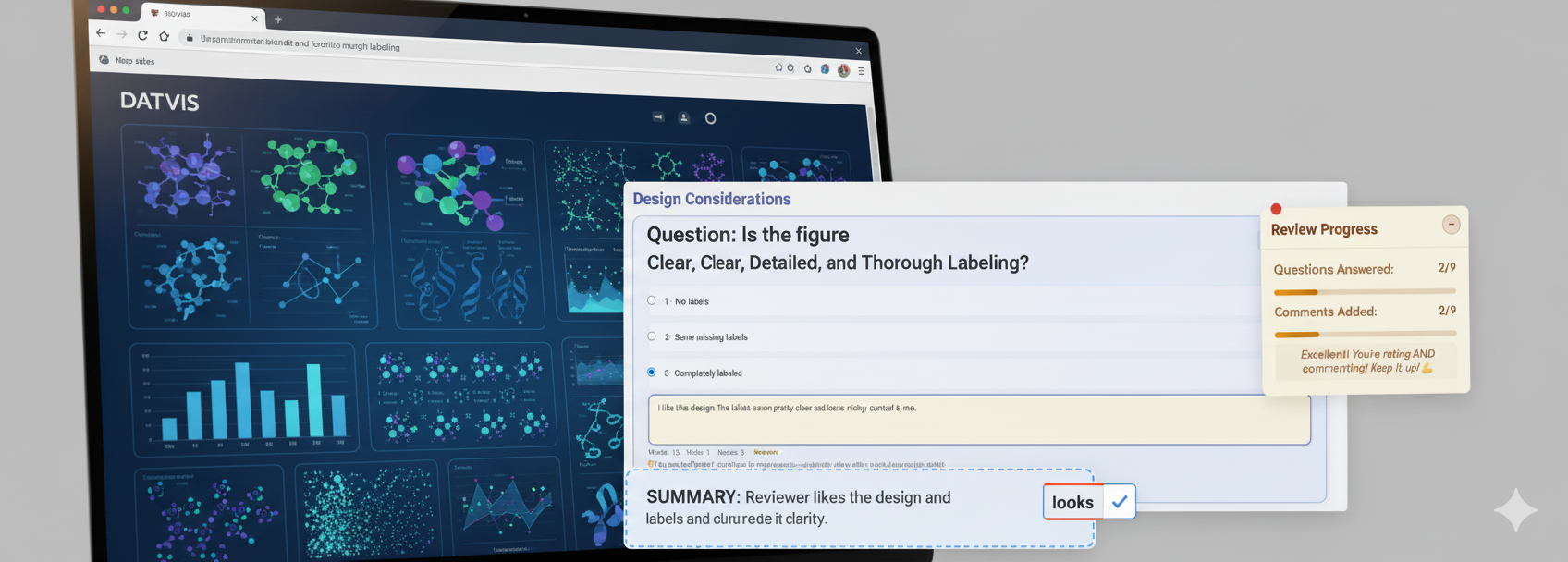
Visual Peer Review website interface

Visual peer review with nudges represents a novel approach to collaborative feedback in data visualization and design contexts. Our research explores how combining visual annotation capabilities with strategic nudging mechanisms can improve both the quality and timeliness of peer reviews.

Traditional peer review processes often suffer from delayed responses, incomplete feedback, and lack of contextual specificity. By integrating visual markup tools directly into the review interface and employing behavioral nudges based on established principles from cognitive psychology, we aim to address these fundamental challenges.

This project investigates the intersection of human-computer interaction, data visualization, and behavioral economics to create more effective collaborative review systems. Our approach enables reviewers to provide precise, contextual feedback while gentle nudges ensure sustained engagement and timely completion.
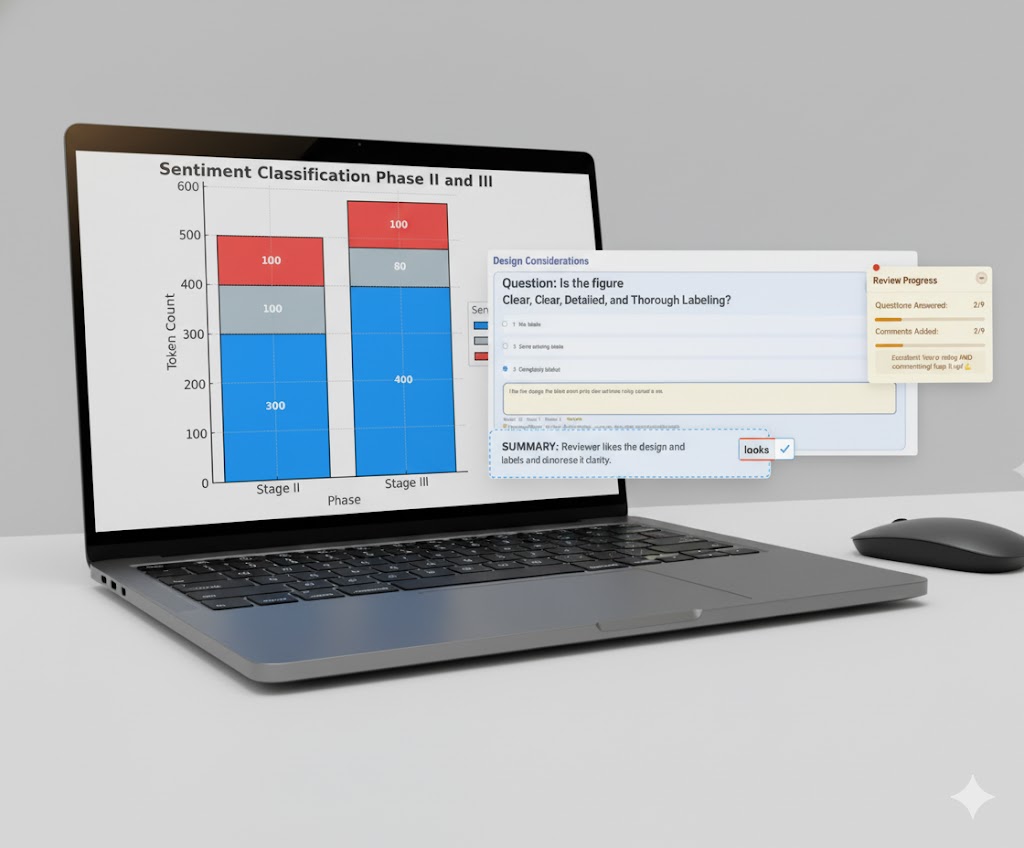
Visual peer review interface demonstration
1

Indepth Feedback

Visual markup tools enable reviewers to provide contextual, specific feedback directly on visualizations.

2

Behavioral Nudges

Strategic nudges based on cognitive psychology principles guide reviewers toward comprehensive feedback.

3

Timely Reviews

Gentle prompts and progress tracking ensure sustained engagement and completion of reviews.

4

Data-Driven Insights

Analytics reveal patterns in review quality and help educators improve visualization pedagogy.
What Visual Peer Review Brings to Education

We're transforming how students learn through peer collaboration by making feedback more visual, constructive, and impactful.

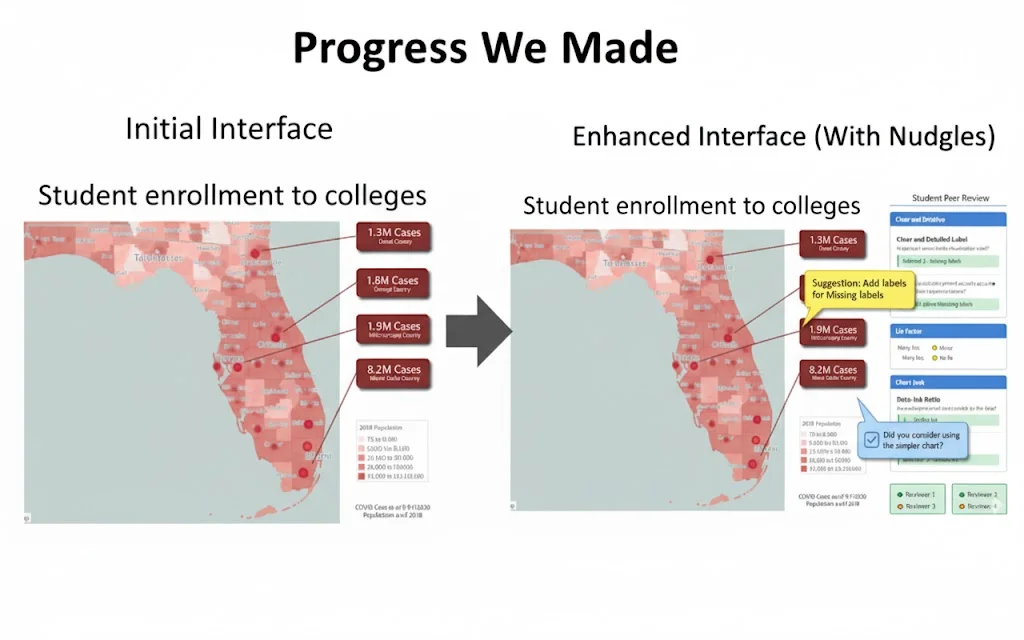
Before and after comparison showing improved review interface
1

Critical Thinking

Students learn to evaluate work objectively, give constructive feedback, and reflect on their own learning process.

2

Deeper Learning

Providing feedback reinforces understanding and helps students engage more deeply with course concepts.

3

Collaborative Growth

Fosters a community of learners who support one another’s progress while building empathy and collaboration skills.

4

Better Outcomes

Structured peer review improves student work, boosts engagement, and strengthens higher-order thinking.

5

Smart Guidance

Our nudging system helps reviewers deliver clearer, more actionable, and balanced feedback

6

Instructor Insights

Analytics provide educators with data on student performance, engagement, and areas for improvement.

Smart Nudges

✨ NEW FEATURE

Our latest feature guides students in giving better feedback in real time—like having a mentor alongside each reviewer (without using AI)

Visual Peer Review Final 2025
1

Stay Focused

Nudges remind reviewers to comment on specific elements, making feedback clearer and more useful

2

Be Constructive

Encourages reviewers to offer solutions and alternatives, not just point out problems

3

Highlight Strengths

Prompts reviewers to recognize effective design choices, balancing critique with positive insight

4

Encourage Reflection

Helps students compare feedback with their own work, deepening self-awareness and growth

Get Involved

Interested in collaborating or learning more? Visit our Contact page or join the project.

NSF Support

Supported by the National Science Foundation

Division of Undergraduate Education (DUE) & Directorate for Education and Human Resources (EHR)

View Grant No. 2216227